

No. 144 - Teresa Teng’s 月亮代表我的心 (“The Moon Represents My Heart”) changed my life
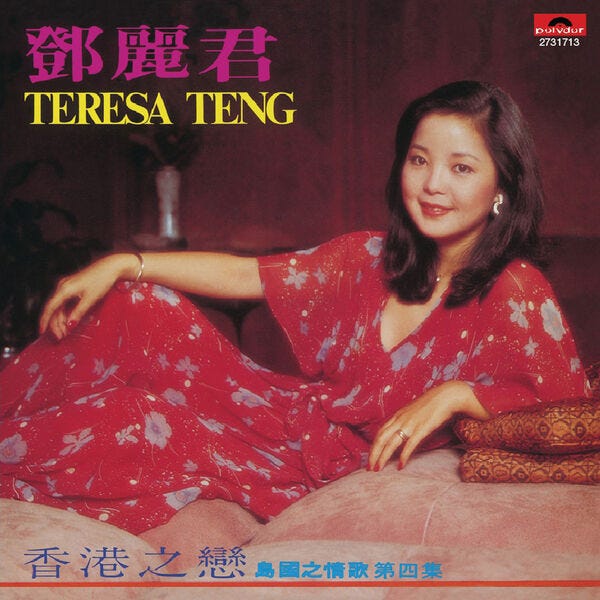
The 1977 Taiwanese hit that soundtracked Kathleen Barnes’s childhood

This Song Changed My Life is an independent music publication featuring weekly essays from people all around the world about the songs that mean the most to them. Created (and illustrated) by Grace Lilly.
Join 1,000+ music lovers to get a new essay in your inbox every Friday 😊
• 6 min read •
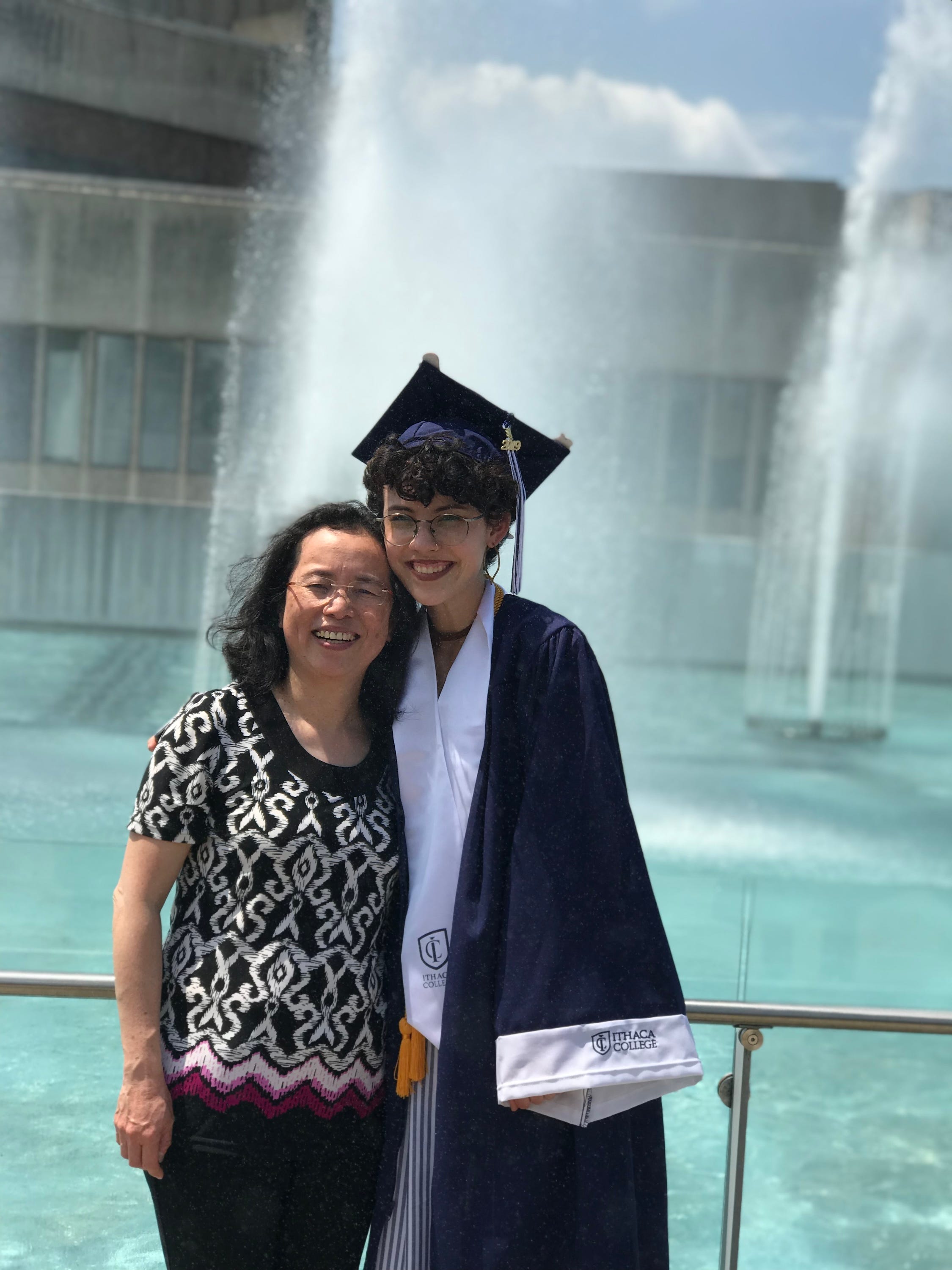
Mom was always humming and bustling when we were growing up. Snippets of “Morning Has Broken” while chopping turnips, stuff like that, with random la-la-la’s in place of the lyrics. I ended up associating many folk tunes with house chores because of this. I think it’s also why it took me so long to realize that I had indeed heard many Taiwanese and Mandarin pop songs before — just many of them wordless and in the form of my mother doing laundry.
I was much more mentally open to receiving these hums as a child, but growing older and deciding to go to music school also meant being hellbent on listening to as much flute and classical music as possible. I had to listen to learn my pieces and play them well, but for some reason it was a zero-sum issue in my head, as if time spent listening to anything else would impede my musical growth. It was about the music, but it was also a bit about being the best in those days.
So, when I inevitably burnt out the autumn after college graduation, I started trying to breathe again with my heart instead of only my diaphragm. This also happened to be 2019, which is how I ended up focusing on relearning Mandarin and rediscovering T- and Mandopop during lockdown rather than remaining fixated on classical music.
Being curious and wanting to connect to Taiwan in some way, I enrolled in an online class through the Taiwanese government’s Overseas Community Affairs Council. One day my teacher happened to mention Teresa Teng, one of the most famous East Asian pop stars of the 20th century, and after class I felt a pull to track down her top hits.
As soon as I heard the first fifteen seconds of “Yue liang dai biao wo de xin” (月亮代表我的心 or “The Moon Represents My Heart”), something twisted inside me and tears sprang to my eyes. Holy crap, yeah — I had heard this before. I felt like I was seven years old in my parents’ kitchen again, Mom in my periphery sporting her tiny red apron and stirring a pot of good-smelling stuff while singing random syllables — dee dahh doh dohh, doo dooo dah dehhh — the melody of a gooey Taiwanese love song. It had been the soundtrack to my childhood, and I had had no idea. And chances are, if you’ve attended any Taiwanese or Chinese house parties or events, you’ve likely heard Teresa Teng’s angelic croon floating underneath the chatter.
⁂
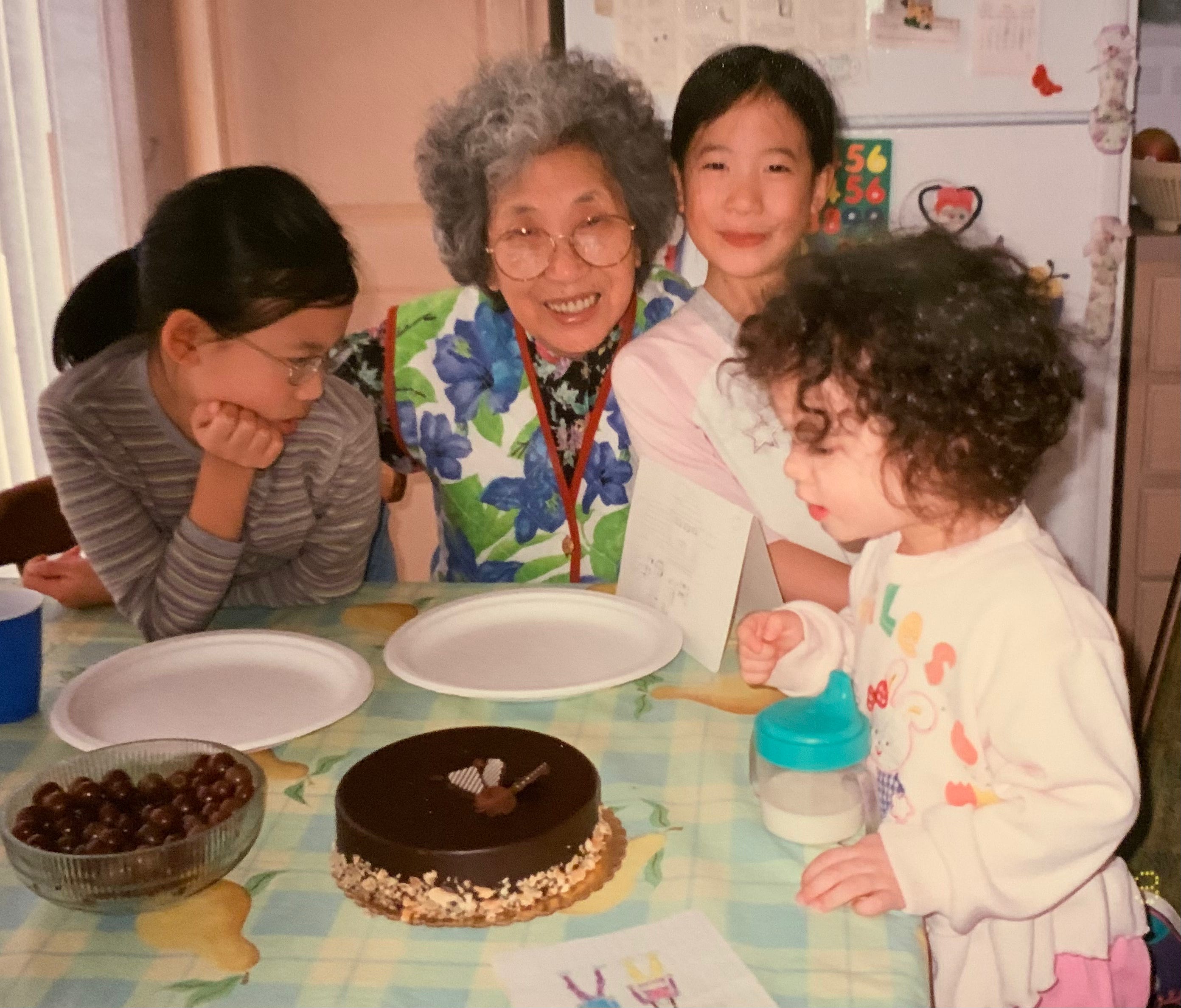
A year later, my mom called me in the night. My waipo, my Chinese grandmother, had died of Covid in a hospital bed in Taipei. She had died alone. We decided that we would leave for Taiwan in five days.
I made my way to Jersey. Mom kept it inside but I could tell she was processing a million complicated feelings. Who wouldn’t be, losing a parent across the world? She had just spent the last three years returning to Taiwan for months at a time to help care for her mother, splitting the time up with her three older sisters. Waipo had been in her nineties, exact age unknown. She’d been sick for a long time, and by the end, she hadn’t known who any of us were — even her four daughters.
And so my mom, my sister, and I flew to Taipei. We stayed with my aunts and uncles in the small family apartment in the district of Neihu. The hospital-style rolling bed that my grandmother had spent most of her last years on was still there. We all tried to ignore it.
One of the mornings before the service, Mom and I were taking an early stroll around the nearby Lake Bihu. We fell into the kind of comfortable silence that exists between two people dear to each other. Bihu was shining in the sun, its waters brushing up against the raised, latticed white walkways over the lake as we traversed the well-worn path. Out of the blue, I said, “Hey, Mom, you ever listen to Teresa Teng?”
She looked at me incredulously. “Teresa Teng?” Turning back to the lake, she smiled to herself. “很有名啊!一定聽過了很多次。Hen you ming a! Yi ding ting guo le hen duo ci.” So famous! Listened to her so many times.
I laughed. “So you know that song? ‘Yue liang dai biao wo de xin’?” I paused, embarrassed about being so late to the party. “I kind of just started listening to her.”
She chuckled in her quiet way. “Well, of course!” in English. She started singing, “你問我愛你有多深 ni wen wo ai ni you duo shen…” I joined in unashamedly, butchering half-remembered lyrics: “…我愛你有 wo ai ni you… uh... ji fei…” You ask me how deep my love is… We only managed a couple more lines before we started laughing at ourselves and at each other, eventually wandering back home to Waipo’s tiny apartment.
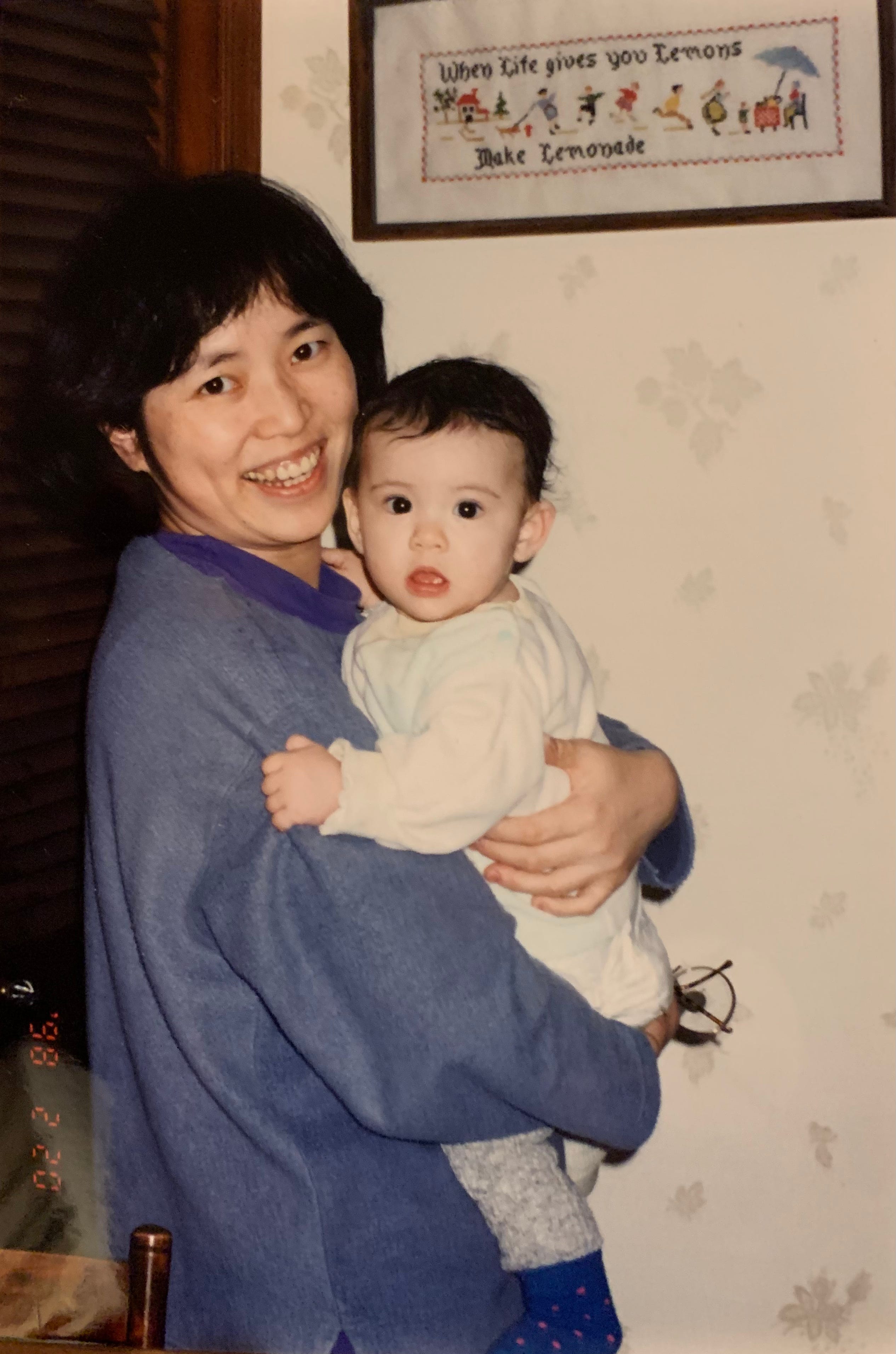
My mom and Teresa, I learned, had a lot in common. They were both part of a wave of Taiwan-born Chinese, born nine years apart in neighboring counties off the west coast of Taiwan, and they both grew up in military villages in two of many Kuomintang families with several children and little means. Teresa showed talent from a young age and grew up to become one of the most famous Taiwanese singers of the century, recording albums in at least five different languages; yet somehow, with all that worldliness, her sweet and clear voice retains a feeling of intimacy. You feel like she’s singing only to you.
Two days later, we went up into the mountains outside of the city of Taipei and said goodbye to my waipo. I still remember my aunts, uncles, and cousins standing silently in the fog. It was the first time in my adult memory I had seen these strong women cry. My mom burst into tears and then quickly stopped herself. I patted her on the shoulder. The attendants lowered Waipo’s coffin, and then she was gone.
⁂
That was November 2022. When I sat down to begin writing this, I realized that it had been exactly three years since that strange week in Taipei.
I’m still listening to Teresa Teng these days. In fact, I returned to Taipei this past September and chanced upon some new musician friends to busk with. It was the first time I had done such a thing over there. A growth moment.
We set up on the sidewalk. We were riffing on different tunes, throwing out ideas ranging from centuries-old Chinese folk songs to Ed Sheeran (ah, western hegemony). You can probably guess where this is going — at a certain point, Cassie, my friend who plays sheng (an ancient Chinese reed instrument), said, “How about ‘Yue liang’?”
Oh, man. YES. Yes, of course.
Many people see “The Moon Represents My Heart” as a pivotal song of the 20th century because it managed to reach a diverse audience of mainland Chinese, Taiwanese, and Hong Kong citizens at the height of political and social tensions, including the aftermath of the Cultural Revolution in China and martial law in Taiwan. Despite government censorship, it is touted as the song that revived pop culture in China after decades of patriotic music broadcasts. Across the strait, and across the sea, many were listening to the same love song.
Sometimes I listen and imagine Mom, fifteen in Taipei, hearing it for the first time on the radio. ◆
About Kathleen
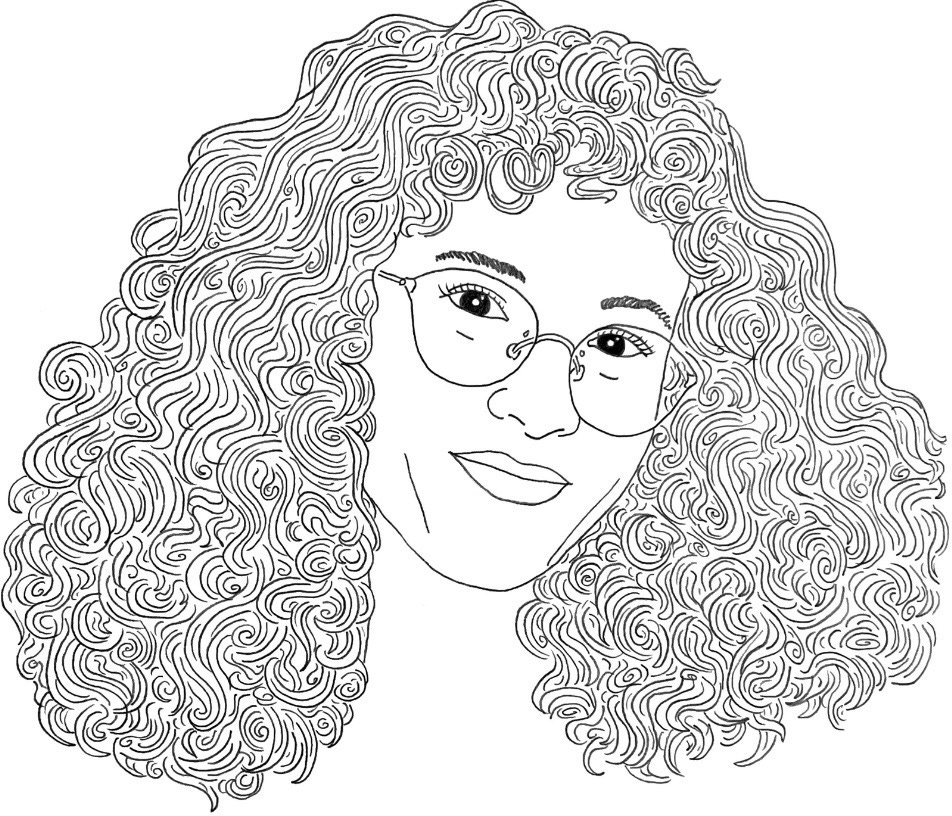
Kathleen Barnes is a musician and visual artist currently living in Brooklyn, New York. She loves to read, eat dessert, climb tall mountains, and see/partake in weird puppet theater.
Instagram @awildkath
⭐ Recommended by
Angelisa Cunniff (No. 093)
Every TSCML writer is asked to recommend a future contributor, creating a never-ending, underlying web of interconnectivity 🕸️
This Song Changed My Life is open to submissions. For consideration, please fill out this simple form.
🔒 Unlock this post with a paid subscription

Diary 💗 Car CDs: ABBA Gold
Dancing in traffic, Y2K music infomercials, and choosing to have a good day. Read→
Categories
Friendship • Family • Coming of Age • Romance • Grief • Spirituality & Religion • Personal Development • LGBTQ+
Recommended